Monday, 30 March 2015

Monday - what a day!


I had quite an impressive "to do" list for today and was able to mark off quite a few off; do the filing, buy some compost, paint a little slatted table white, sort out my walk-in dressing room, clean and pack all the kitchen utensils and cutlery, replant some sword ferns and taking pics for this post. What a day and a great start to this week, it feels like Wednesday already and it's only Monday!


March is when the first sign of autumn arrives in the garden. Leaves start falling and your garden starts readying itself in anticipation of the colder months. My Tree Fuchsia (Halleria lucida) has already lost almost all her leaves, a sure sign for me that we're going to have a cold winter.


A little extra help and encouragement such as a layer of mulch and fertiliser will not go amiss and is a perfect way to prepare your garden for the cold that will shortly follow. Just hope the frost is not going to be as severe as last winter...


Indigenous plants are always in fashion because they save water, grow well in our environment, are fast growing and colourful, especially the Aloes, which should be flowering shortly, providing bursts of colour during the cold months. These are just a few indigenous plants that you can get from your local garden centre:

Vygies (Lampranthus)
Various Aloes, in particular Aloe ferox and Aloe marlothii
Agapanthus
Agathosma ovata 'Kluitjieskraal
Babiana hirsuta  
Buddleja auriculata
Carpobrotus quadrifidus
Celtis africana
Chlorophytum comosum  
Dioscorea elephantipes 
Ekebergia capensis 
Elegia equisetacea
Encephalartos transvenosus 
Faucaria tigrina
Felicia amelloides
Gasteria armstrongii
Gazania krebsiana          
Hermannia
Juncus kraussii  
Kalanchoe thyrsiflora 
Kiggelaria africana
Melinis nerviglumis 
Mentha longifolia 
Nymphaea nouchali var. caerulea 
Olea europaea subsp.africana
Olinia ventosa  
Pachypodium namaquanum 
Pelargonium inquinans
Podocarpus henkelii 
Portulacaria afra
Restio festuciformis
Rhus lancea = Searsia lancea 
Rhus pendulina = Searsia pendulina
Scabiosa africana
Sorghum bicolor 
Syzygium cordatum
Thamnochortus insignis
Tricholaena monachne
Urochloa mosambicensis
Viscum crassulae
Welwitschia mirabilis
Ximenia caffra
Zantedeschia aethiopica 

Hope your Monday was just as good as mine!              
  
.

Sunday, 29 March 2015

Blooming in my garden - February/March

Tiny Erigeron fills the sunny spots with splashes of white. Hailing from Mexico, these perennials with small daisy-like flowers flower over a long period in summer

Lots of rain, and insects enjoying a refreshing drink

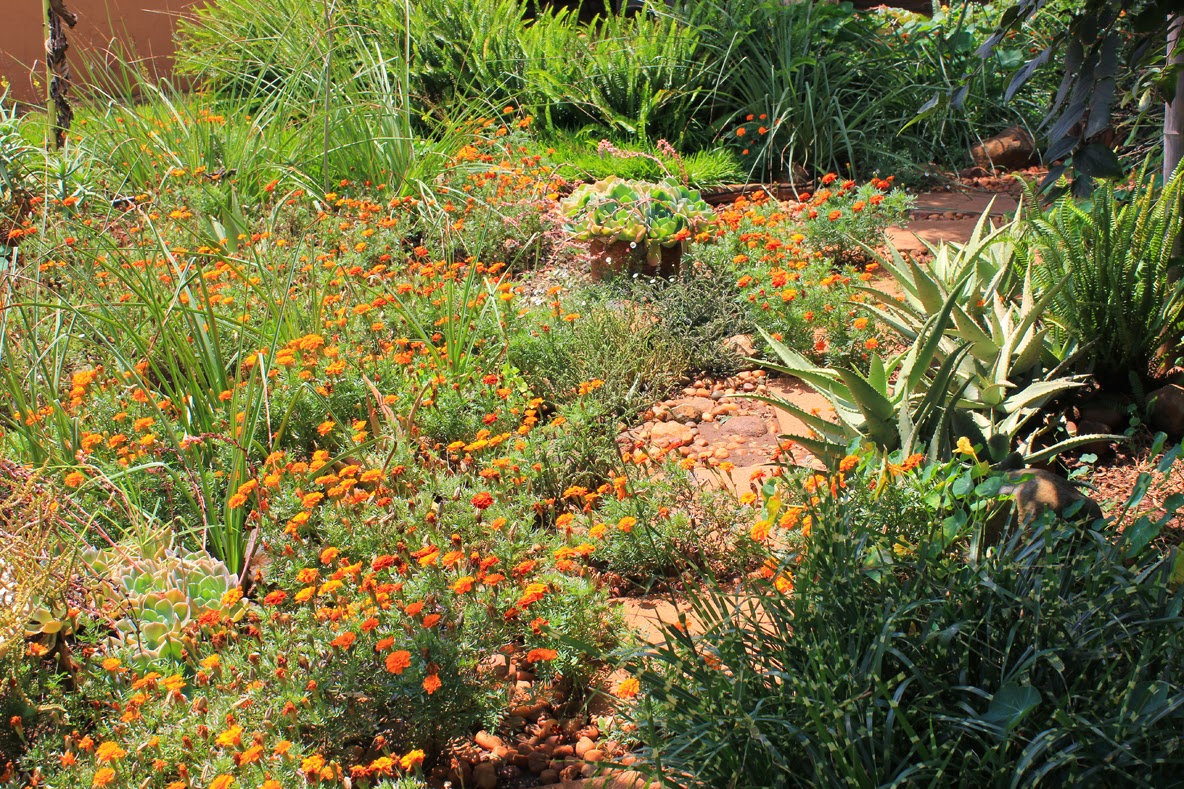
The Marigolds put up a grand show this year


Echeverias in a terracotta pot share space with the Marigolds

Bulbine frutescens almost at the end of their flowering season

A Hoverfly enjoys some nectar

In the middle of March, the plump Hydrangeas started waning

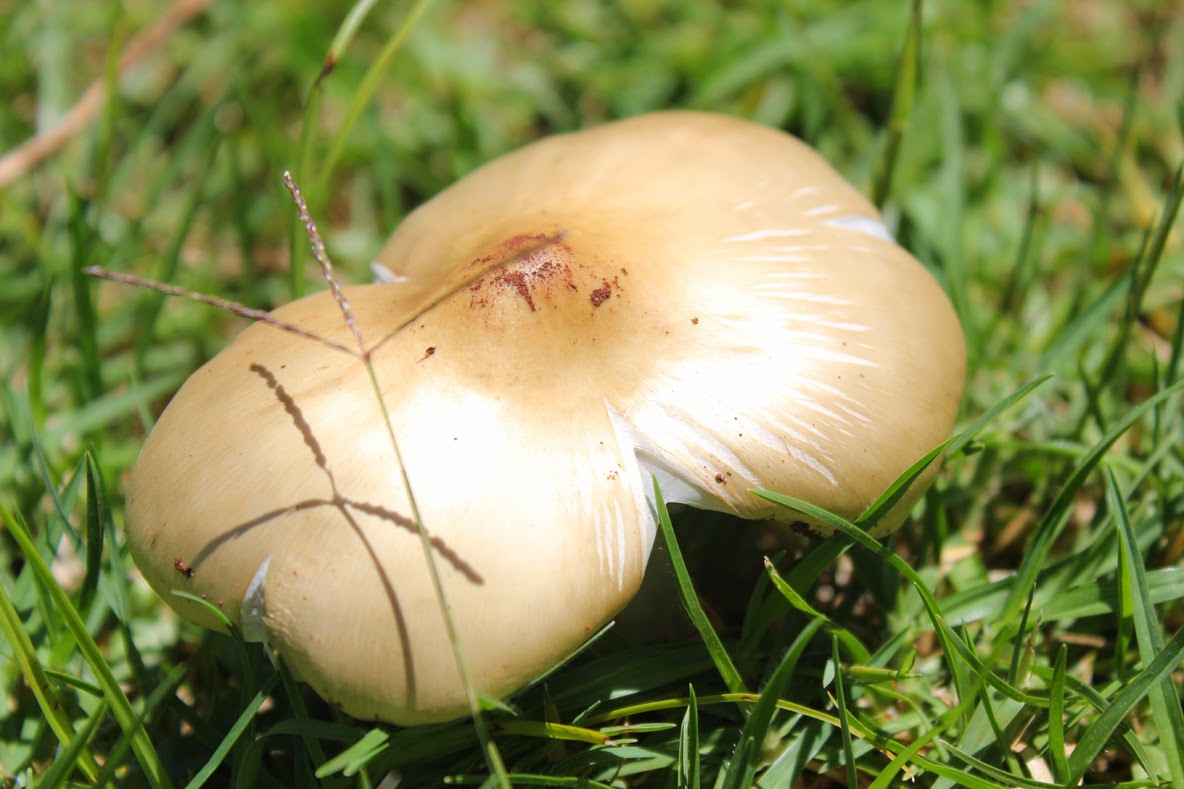
Lots of rain always produces these lovely toadstools all over my lawn

The middle of March and the Nasturtiums were still going strongly

Salvia still clinging to its flowers

Syzygium cordatum (pronounced si-zig-ee-um) is home to many birds and insects and produces these lovely berries at the end of summer
Other names : Waterbessie, umdoni, water berry

 Weeping Anthirucum (Chlorophytum saundersaie)

 Summer memories - Autumn is well under way and soon the cold will be with us.


::

Friday, 27 March 2015

Cleaning the wildlife pond


Every Autumn and Spring is pond cleaning time. As soon as the frogs have stopped singing at night and just before the water gets too cold, we empty it out, scrub and re-arrange and fill up again. Same procedure in Spring, just before the frogs surface again from their hibernation.

With all the rain we've had, accompanied by hot temperatures, the pond is a haven for algae and mosquito larvae, which I'm sure the frogs enjoy!


The first thing to do is to pump out all the water (my garden thrills at that!) as low as possible. The suction pipe is at the lowest point of the pond and when it starts sucking thick sludge, it's time to remove all the thick sludge by hand with buckets.


Solly emptying the sludge while Chrissie sweeps the sides clean


Much of the wildlife in the pond flees to the bottom of the sludge and lands up on the lawn as the pond is emptied. I stand by to save any tadpoles, water beetles, water scorpions and anything else I might find in the sludge, with the chickens revelling in anything I might have missed! I used to try and squirt the sludge away with a hose pipe, but Chrissie "instructed" me to let it dry and then it's easy for her to rake up. You live and learn every day!


With the job almost finished, Solly poses for the camera.


Time to fill the pond with lovely fresh water. I also return all the insects I rescued from the sludge (and had in a bucket of water) to the pond to settle down before I switch on the pump again.


At the same time, the plants at the edge of the pond are trimmed and cleaned up


The finished product. Now, should I get some ducks...?


.

Wednesday, 25 February 2015

Tree Fuchsia (Halleria Lucida)


Not only is Halleria lucida an attractive indigenous tree and an asset to any garden, it is also one of the best bird attracting trees, being favoured by the Amethyst Sunbird for its abundance of nectar. It is an evergreen tree or large shrub, often multi-stemmed, with a spreading crown and attractive glossy bright green foliage on arching and drooping branches.


The flowers are tubular, orange to brick-red, or yellow, very rich in nectar and are produced in clusters in the axils of leaves and on short shoots on the old wood, even on the main trunk. When in full flower in autumn to summer (May to December/January) it can be very showy, although the flowers are somewhat hidden amongst the leaves and inside the canopy.


Halleria lucida is found in coastal and karroid scrub, deep evergreen forest, forest margins, forested ravines, rocky mountain slopes, near rivers and on stream banks from the Cape peninsula in the south in a strip up the eastern coast of South Africa, through the Eastern Cape to Lesotho, the eastern Free State, KwaZulu-Natal and Swaziland where it turns inland and roughly follows the escarpment into Mpumalanga, Gauteng and the Northern and North West Province. It also occurs in isolated pockets in Zimbabwe. In the more exposed situations it is generally a stocky or shrubby tree that reaches a height of 2-5m but in well watered, protected situations it can reach up to 12m, and in forests, it can grow up to 20m in height.


My Tree Fuchsia after one very severe winter

My research revealed that it is relatively hardy to frost (minimum -7 °C/ 20 °F) but requires protection when young. However, even though mine is quite big already, some winters it suffers severe frost damage but luckily has thus far sprung back to life every spring.


 My Tree Fuchsia at the end of a mild winter

Halleria lucida is easily propagated by seed, and cuttings. It can also be propagated by truncheon cuttings or layering and transplants readily. Young plants may flower for the first time in their second year.Seed is best sown in spring to mid-summer (September to December) or in autumn (March to
May), in a standard well-drained seedling mix and covered lightly with coarse sand or milled bark.

 My Tree Fuchsia in full flower during summer

The Zulu nation has a strong belief in traditional medicine and they use Halleria lucida for skin and ear complaints. Dry leaves are soaked in water and squeezed into the ear to relieve earache. This tree is also considered to be a charm against evil. The twigs are burnt when offering sacrifices to the ancestral spirits. The plants are set alight each year, the ashes mixed with crocodile fat and this mixture is smeared onto cuttings of Rhamnus prinoides which are then driven into the ground around the village to protect the community from wizardry and lightning. The wood can also be used to start a fire by friction. Halleria lucida timber is light coloured tinged with yellow, hard, heavy and strong, well suited to carpentry, but is not much used because the pieces are small. It was once valued for wagon poles, tools and spear shafts.

Family: Scrophulariaceae (Snapdragon Family)
Common Names: Tree Fuchsia (Eng), Notsung; Ouhout; Septee; Witolyf (Afr), umBinza (Xhosa)


.

Wednesday, 28 January 2015

January at the wildlife pond


 Water scorpion

Water scorpion

::
Related Posts Plugin for WordPress, Blogger...